Origin of Ollie
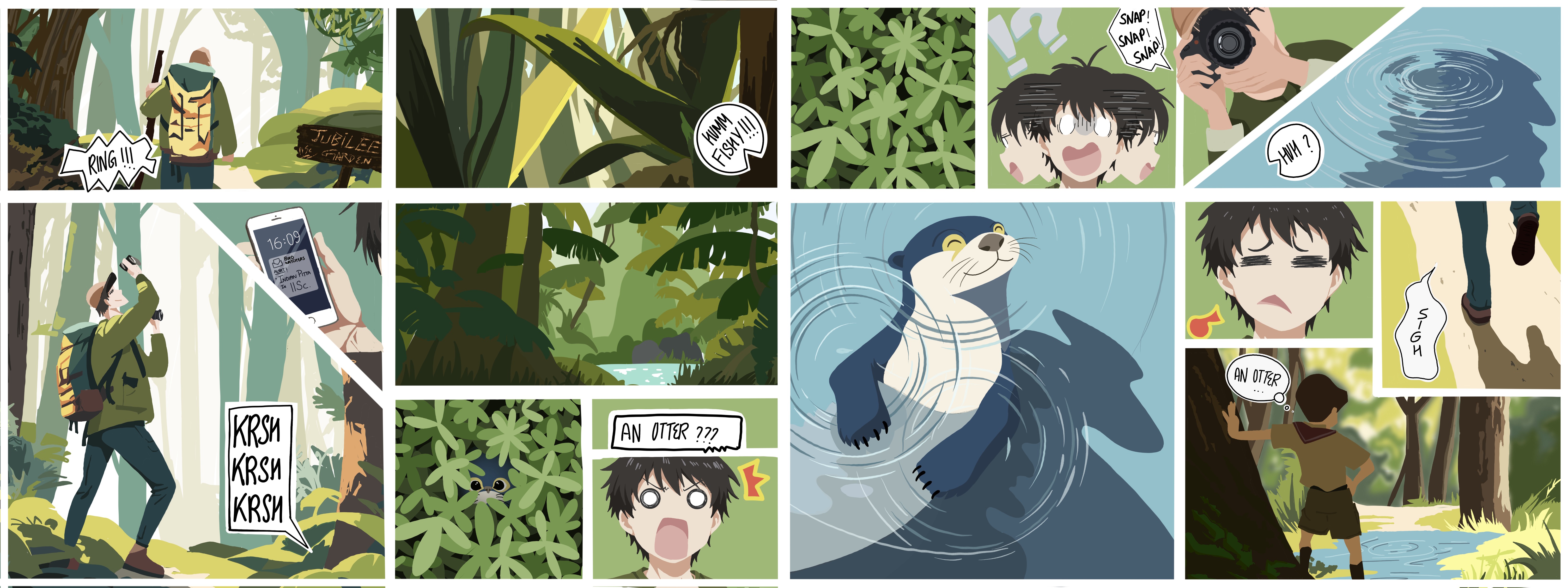
It was a fine evening in early November 2018 when I ventured into the Indian Institute of Science (11Sc), Bangalore, for bird watching after receiving alerts about sightings of the Indian Pitta and Bive-throated Bive Flycatcher. Near Jubilee Garden, where a small pond lies hidden among trees, I paused to observe flycatchers, Pond Herons, drongos, and a lone cormorant.
It was a fine evening in early November 2018 when I ventured into the Indian Institute of Science (11Sc), Bangalore, for bird watching after receiving alerts about sightings of the Indian Pitta and Bive-throated Bive Flycatcher. Near Jubilee Garden, where a small pond lies hidden among trees, I paused to observe flycatchers, Pond Herons, drongos, and a lone cormorant.
Just as I was about to move on, I noticed something large crawling through the bushes toward the pond. Camera ready, I watched in disbelief as a Smooth-coated Otter emerged-healthy, well-built, and seemingly as surprised to see me as I was to see him. I clicked several photographs before he avoided my path, slipped into the pond, gave me one last look, and disappeared beneath the bushes. Spotting this rare animal in such a small water body thrilled me far more than the birds I had come for.
Smooth-coated Otters (Lutrogale perspicillata) typically prefer rocky riverbanks and reservoirs. I had previously encountered them in the River Cauvery and a reservoir in Salem district, Tamil Nadu, which made me wonder how this individual came to inhabit a modest pond within Bangalore’s concrete landscape.
Curious, I searched for earlier records and found a 2017 camera-trap sighting from the forests of the Roerich estate on the city’s outskirts-interesting, considering one sighting was outside the city and this one in its heart.
India is home to three otter species. Usvally seen in playful groups called romps, they feed mainly on fish along with insects, frogs, birds, and rats. The Smooth-coated Otter is listed as Vulnerable on the IUCN Red List, threatened by habitat loss, poaching, and water contamination from urbanization. The Cauvery and Tungabhadra riverbeds remain key habitats, but whether shrinking ecosystems are pushing otters into urban water bodies is a question worth studying.
- K. DHANPAL