
When Exploration Refuses to End - The Opportunity Rover
Author: Abhimanyu Ambikapathy
Watching the documentary Good Night Oppy is, at first, an exercise in observation. We are introduced to the rover right at the start - functional, distant, and engineered with precision for a task millions of kilometres away. Through archival footage, mission logs, and the voices of engineers, the rover begins to feel less like a machine and more like a participant in a long and uncertain journey. The viewer follows not just data being collected on the Martian surface, but the passage of time, setbacks, recoveries, and quiet triumphs - things that are unseen by the public. By the end, what remains is not merely an account of a space mission, but the memory of endurance. Beneath this emotional narrative, however, lies a mission driven by a fundamental scientific question - one that shaped decades of planetary exploration.
That question - whether Mars once harboured liquid water, and by extension, conditions suitable for life - motivated NASA to design the Mars Exploration Rover program. To address the issue of not knowing much about the Martian past, NASA developed two identical rovers, Spirit and Opportunity, each equipped to traverse the Martian terrain and conduct in-situ analysis of rocks and soil. Building upon the successes of missions such as Mars Pathfinder, these rovers represented a shift toward mobility and sustained surface science - allowing scientists not only to observe Mars, but to investigate its geological history directly.
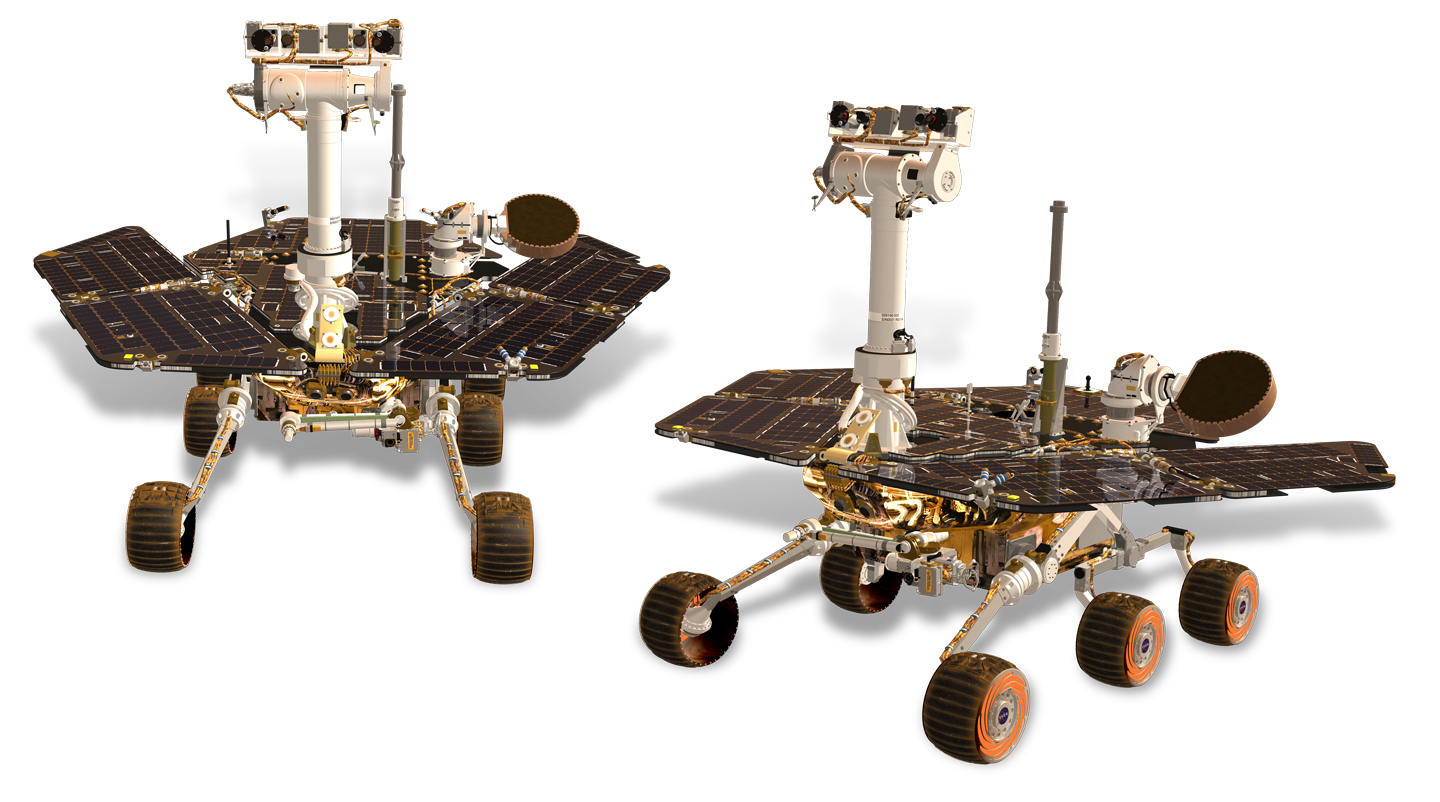 Spirit and Opportunity. Source: Wikipedia
Launched on July 8, 2003 and successfully landing on Mars on January 25, 2004, Opportunity touched down in Eagle Crater, a site chosen for its exposed bedrock. Unlike stationary lander missions, the rover was designed to move across the surface, carrying instruments capable of imaging, chemical analysis, and mechanical interaction with Martian rocks. Its payload included spectrometers to determine mineral composition and a rock abrasion tool to expose unweathered surfaces beneath the dust. Through these capabilities, Opportunity was tasked with identifying minerals that form in the presence of water and reconstructing the environmental conditions suiting rock formation on the planet.
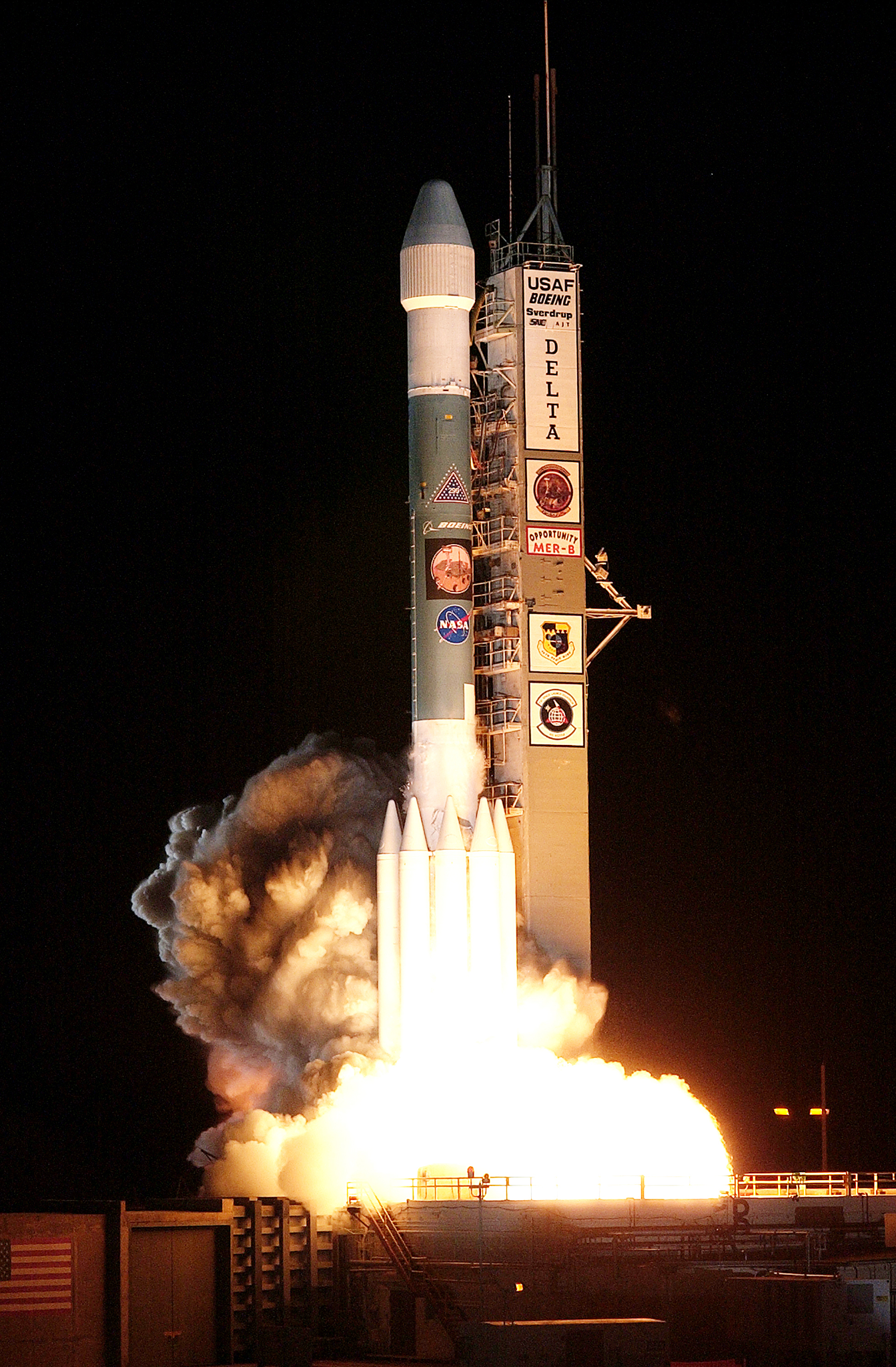 Delta II launching Oppy. Source: NASA Science
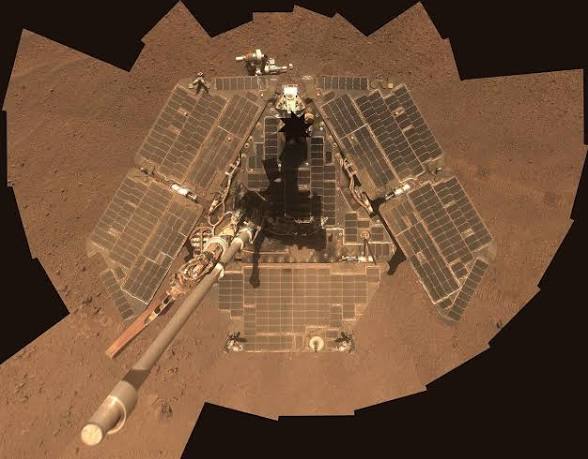
What followed in the months - and eventually years - after landing exceeded all initial expectations. Opportunity soon identified small spherical formations composed of hematite, informally termed “blueberries,” whose formation is strongly associated with aqueous environments. As it traversed from Eagle Crater to larger sites such as Endurance, Victoria, and eventually Endeavour Crater, the rover uncovered layered sedimentary rocks and mineral signatures indicative of ancient, water-rich conditions. These findings provided some of the most compelling evidence that Mars once possessed environments potentially hospitable to life. The main highlight was the unexpected longevity of the mission, which was originally planned to last 90 Sols and continued for nearly 15 years (5352 Sols), covering over 45 kilometers across the Martian surface. This was not accidental; it was the result of robust engineering, careful operational planning, and fortunate environmental factors such as periodic dust-cleaning events that restored the rover’s solar panels. Opportunity became not just an instrument of discovery, but a sustained presence on Mars - quietly extending the timeline of scientific observation far beyond its intended limits.
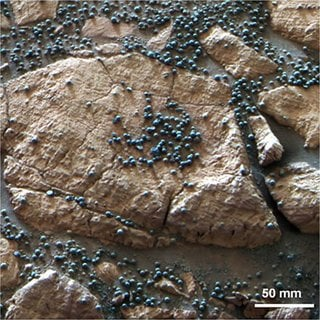 “Blueberries” on Mars. Source: ResearchGate
The scientific legacy of Opportunity is profound. It transformed our understanding of Mars from a cold, static world into one with a dynamic and aqueous past, laying the groundwork for subsequent missions such as Curiosity and Perseverance, which continue the search for signs of past life. In doing so, Opportunity did not merely answer existing questions - it refined them, guiding future exploration toward more precise and ambitious goals. Its data continues to be analyzed, its traverses revisited, and its findings reinterpreted in the context of an evolving understanding of planetary science. The sudden end to the mission on June 10, 2018 brought about by a dust storm that obscured sunlight and drained the rover’s solar-powered systems marked more than the end of data transmission.
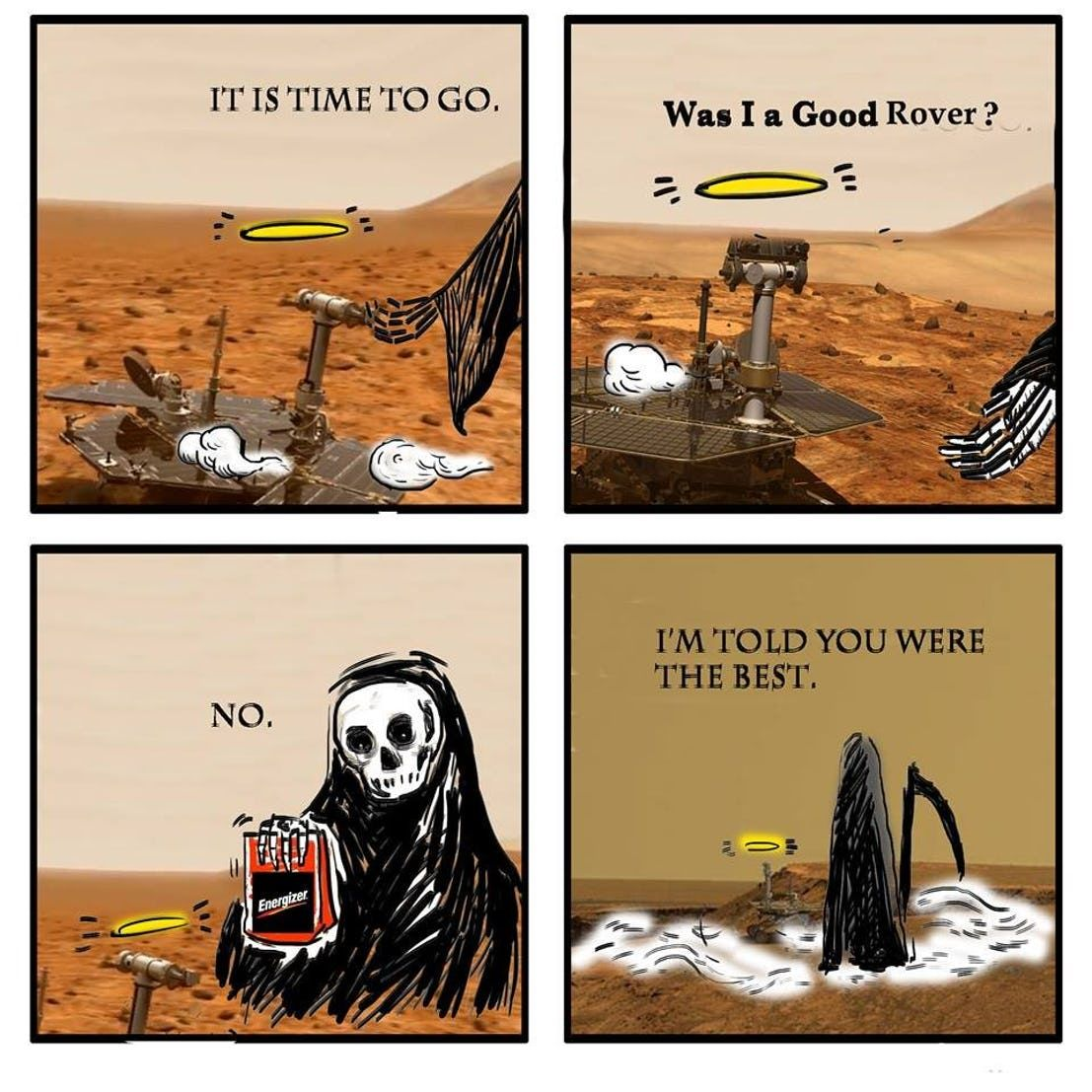
Over years of operation, Opportunity had become a constant - its daily updates followed not only by scientists, but by people around the world. When communication was finally lost, the silence carried an unexpected weight, often remembered through the translated sentiment of its final transmission: “My battery is low and it’s getting dark.” In that quiet message, a machine came to symbolize something far beyond its nature. The rover, built to explore without emotion, had nonetheless come to embody something deeply human: persistence in the face of uncertainty, the quiet accumulation of knowledge over time, and the refusal to cease exploration even when conditions grow harsh. In the end, as the darkness settled over the Martian landscape, Opportunity’s journey echoed beyond science - leaving behind not just data, but a story of endurance that continues to shape how we think about exploration itself.
Indeed, thank you and have a good night, Oppy.