Rhapsody and Relativity
Why your main quest needs a side quest. Explore the deep structural similarities between music and physics, and how cross-pollinating ideas can ignite creative breakthroughs.
Rhapsody and Relativity
-Why your main quest needs a side quest
‘How’s your mathematics?’
‘Not good enough for the physicist he wants to be.’
‘Algebra is like sheet music. The important thing isn’t ‘can you read music’. It’s ‘can you hear it’. Can you hear the music, Robert?’
‘Yes, I can!’
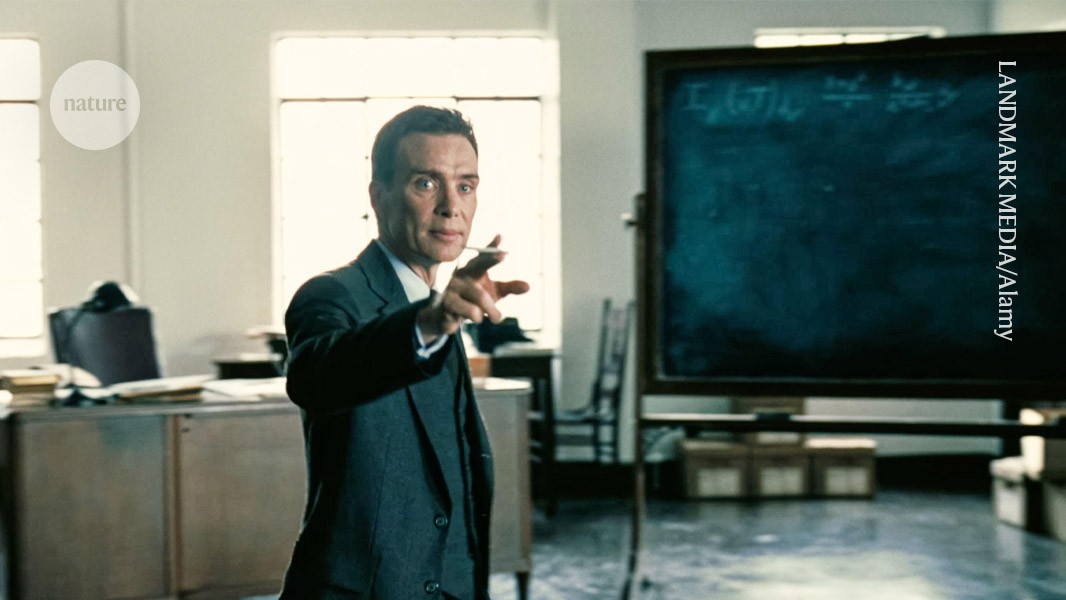
And thus, a much-acclaimed musical score titled ‘Can you hear the music’ begins to play in the film ‘Oppenheimer (2023)’, overlaid with shots of Robert Oppenheimer (Cillian Murphy) evolving from a vibrant student to a bustling physicist. Born into a highly cultured household, Oppenheimer developed an early, deep intellectual appreciation for harmony and musical meaning. He was drawn to the clarity of classical music with its strict rules and baroque elegance. Though he never mastered any musical instrument, his biographers believe that these refined artistic sensibilities enabled him to do what others could only imagine. Directing the atomic research laboratory at Los Alamos, like a music conductor whose ears are trained to spot a single dissonant note, he could go on listening to lengthy project reports and instantly pinpoint the one dysfunctional link. From his aesthetic upbringing, he had internalised the idea that beauty emerges from the synthesis of disparate parts, just as diverse notes and rhythms join to create one coherent piece of music. Perhaps this is how, when other scientists were lost in the drudgery of the equations and calculations, he could stand near the blackboard, connect the separate threads in his head, and ultimately grasp the ‘big picture’. So, indeed, he could hear the music!
Not just Oppenheimer, but most eminent scientists had some mysterious attraction towards music. Richard Feynman played the bongo drums; Werner Heisenberg was a classically trained pianist, and so was Ludwig Boltzmann; Max Planck was a gifted singer, and the list goes on. Could there be, perhaps, some enigmatic connection between the architecture of symphonies and the pursuit of understanding the universe itself?
One obvious connection between the two is an inherent structural beauty. Just as the appeal of an exquisitely composed sonata is mesmerizing, so too is the allure of an elegant theory and concise equations. Both disciplines make use of constraints—whether through a fixed set of notes or nature’s absolute postulates—and play around within their boundaries to elicit fascination. Sitting deep in the heart of these endeavours, it could be this pursuit of beauty that draws an analytical mind and invites it to wander. This was profoundly true for Albert Einstein, who treated his violin as a favorite brainstorming playground, using it to spark solutions to complex scientific problems. He often claimed that his ideas were born intuitively as images, with “Bach and Mozart aiding the process”. He even went so far as to state that his own theory of relativity was a “musical thought.” Ultimately, his pursuit of musical elegance fueled his pursuit of universal truth.
Einstein’s breakthrough uncovers another link between art and science: the literacy of patterns. The ability to recognise underlying patterns efficiently is rewarded in both fields and is gained only through years of practice and hard work. A physicist looks at raw, messy, chaotic, experimental data and tries to find a pattern. Music, too, requires connecting rhythmic motifs and chord progressions across a vast array of combinations to build the most compelling and appealing architecture of harmonies. Although this formidable task is much like walking in a dark cave for those unaccustomed to its voids, for a few fortunate ones, intuition is the lamp that shines the path. It provides the initial leap that logic, words, or theories cannot provide, and once it is made, the latter follows. Early quantum mechanics, for instance, was a guessing game. Decades before Niels Bohr decoded the physical architecture of the atom, figures like Johann Balmer—a sixty-year-old schoolteacher and geometer—and Johannes Rydberg stared at the data of atomic spectra. Approaching the numbers not as a physical problem, but as a pure geometric puzzle, they intuitively guessed the mathematical patterns, arriving at the exact equations governing spectral lines decades before anyone could explain the physical reality behind them. Music shares this exact trait. When one of the most acclaimed and expert composers of all time, J.S. Bach, was provided a very complex melody to improvise upon by King Frederick with the intent of testing his skills, Bach not only recognized its hidden symmetry but also turned it into a seamless composition that flowed back and forth and dedicated it to the king.
History holds records of such people devoted to music. Devotion to music can teach one to trust the process, work hard, and relentlessly pursue perfection. One may have to spend years learning the art before one reaches the summit of being able to perform Mozart’s ‘Turkish March’ or Beethoven’s ‘Hammerklavier’. This grit and perseverance instilled as classical training in a child can evolve into an innate quality and later aid the pursuit of fundamental truth, which also requires years of learning before one reaches the forefront of scientific inquiry.
What makes science and music truly unforgettable experiences for an individual is the difference between their public and private experiences. Behind a musician’s passionate performance are hours of toil and silent solitary struggles: trying to work on imperfections, the fear of erring on the stage, and putting one’s soul into the craft. Hours of toil and struggle are indifferent for a physicist. What the world sees is the publication of a seminal paper, a groundbreaking discovery, or a colossal theory. What it does not see are the countless hours spent working on the theory, writing and rewriting the equations, trying different possibilities, conducting and redoing the experiments, and burning the midnight oil to fix the apparatus. No doubt the practitioners of such crafts are obsessed, devoted, and allow their work to consume them to ensure the ‘public performance’ is flawless, while resolutely accepting their secluded hustle.
But what can we learn from this unobvious connection between the two fields? It is the idea of combinatorial creativity—the art of connecting the dots and cross-pollinating ideas from a wealth of disciplines to create something unexpected, as described beautifully by the renowned author Maria Popova. When you exhaust your analytical faculties on a stubborn physics problem, switching to a different lingo—like music—engages the brain’s spatial and auditory realms. By switching off your ‘mathematical brain’ and letting your ‘musical brain’ grapple with your problem in a different tongue, you allow the subconscious to work. When it finally whispers the solution back to you, you experience a genuine ‘eureka’ moment, a disguised intuition at work. So, it matters less what field you are in; the side-quests in other disjoint disciplines always bear the potential to fuel your main quest.
Stuck in a math problem? Close your book and paint your heart out; let the lines offer some geometric insight.
Can’t figure out what to draw? Put your headphones on, listen to a fluid classical violin piece, and try to capture that sound on canvas.
Can’t put the chords together? Grab a pen and use the Fibonacci sequence to map out a new tune. But what if stuck in mathematics? Go back three paragraphs and read it once more. (Yes, I just put your brain into an infinite loop —borrowed from computer science. Consider it a live demonstration of combinatorial creativity!)